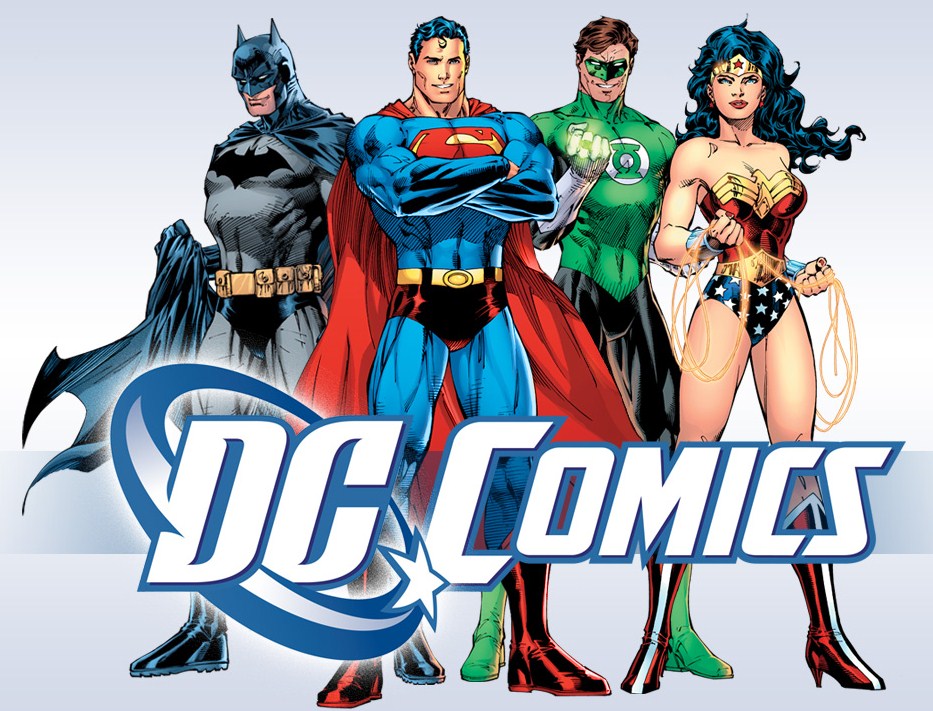
On behalf of what must be hundreds, or dare I even say thousands, of comic book readers who also own phones, tablets, and even our own home computers, it is my pleasure to finally welcome the comic book industry into the 21st century. Each of the big four comics publishers (DC, Marvel, Image, and Dark Horse) have committed to releasing every issue of every comic for digital download on the same day that the physical comics ship to retailers.
Well, okay: Marvel’s only announced their plans to bring the rest of their titles to same-date-digital by April. But I’ve been eager to write that sentence ever since I got my first iPad.
Why is “same date delivery” important? Particularly when casual readers don’t necessarily rush out every Wednesday to pick up their comics fresh off of the UPS truck?
It’s more symbolic than anything else. The true significance is that the distribution of digital columns is no longer going to be selective or strategic. In music and books, you can freely assume that anything you can buy as a physical object can also be bought digitally. I stand at the intersection of Comic Book and Tech Geekdom and even I couldn’t get myself interested in digital comics before now. The whole concept was like that awful comic book shop that I drive past on my way to my usual shop: the owner orders very small quantities and only orders books that he himself likes. If I’ve no idea what he’ll have, why waste my time there?
Now, the big four are in the game.
It sure took them long enough to come around, didn’t it? Granted, a comic page is probably the least-malleable form of content there is, and thus the hardest to adapt to electronic devices. The page is exactly so high and so wide, and has art panels of no fixed size and shape that can follow practically any sequential path from the top-left to the bottom-right. Each panel is a mixture of words and imagery . . . and a smirk in the corner of a character’s mouth can be more important to the story than the words he’s speaking. The words of F. Scott Fitzgerald’s “The Great Gatsby” obligingly reflow to fill any screen. The sinuous and sumptuous artwork of P. Craig Russell in issue #50 of “Sandman” would be horribly diminished by even the slightest adjustment.
It was clear that publishers would make their move when they thought the time was right to go all-in by publishing their complete line of comics digitally the same day they shipped to comics shops. But I was surprised that they left such deep and frantic clawmarks in the floorboards. They only got here after being dragged into it by increasingly-loud Agents of Change:
1) Apple created iOS, the first mobile operating system that could even handle such a complex piece of media. The iPhone begat the iPad -- a device that’s only marginally-less than the perfect digital comics reader -- and also legions of multitouch phones that could, at least, work credibly-well in that role.
Marvel introduced a comics app for their own titles on the day of the first iPad’s release, but they did little with it. Nearly all of the comics they released were years-old, and it was painfully clear that the main role of this app wasn’t to sell this week’s titles, but to drive people to the stores. It was just dull, damnable marketing.
2) Apple created an App Store for iOS that solved most of the tedious transactioning and discovery problems associated with distribution.
3) Multiple digital comics distributors -- most notably, iVerse and Comixology -- established themselves and built great storefronts and reader apps for multiple platforms, which transformed the publishers’ problem from “we need to create a whole new digital factory, distribution channel, and editorial team” to “we need to pick a partner.”
4) The iPad was released and sold so monstrously-huge (particularly among the sort of people who buy comics) that it didn’t really matter that it was the sole successful tablet on the market.
But maybe most importantly:
5) DC comics closed its eyes, commended its soul to God -- or perhaps the New Gods, considering -- and took the leap. They went all-in. And I mean allllll the way in. They didn’t just flip a switch and suddenly spit the same comics out through two spigots. They spent all of 2011 methodically setting a torch to every last one of their ongoing titles and restarted them all in September. Batman, Wonder Woman, Superman, and the Justice League are how you remember them -- mostly -- but every book started with zero backstory. Someone who bought their very first DC comic in September was on exactly the same footing as someone who’d spent the past quarter-century arguing about whether or not Power Girl actually crossed over from the multiverse as it existed before the events of the “Crisis On Infinite Earths” 12-issue limited series.
What a move. One of the problems that digital distribution addresses (from the publisher’s point of view, anyway) is that there are far fewer places to buy physical comic books today. If you want to buy a comic that was released this week, you won’t find it in a corner convenience store and you probably won’t even find it at one of the few national retailers left that still stocks comics next to the rest of their periodicals. You’ll have to find a comic book shop within driving distance and in many towns, such a beast simply doesn’t exist.
(See for yourself: visit comicshoplocator.com and punch in your zip code.)
Turning every home and office with an Internet connection into a comic book store gives publishers a new reach . . . and possibly a new lifeline. DC was smart to realize that “people who don’t have a comic book shop nearby” are practically by definition “people who haven’t been regular comic book readers for a long, long time, or perhaps never were to begin with.”
So: DC made new readers happy by giving them a zero-backstory entry point to every title the company publishes. They made existing readers happy by introducing the company-wide New First Issues as a major crossover story event. We complain about these things, but the sales figures also prove that we buy these things. It was such a huge event that DC Comics grabbed the full and high-definition attention of every form of mainstream media you could name. DC must be happy; sales are through the roof and (according to DC) November will mark their third consecutive month as the #1 comics publisher, after perennially sitting behind Marvel.
Although DC has yet to disclose sales figures on digital sales of what’s termed “The New 52.” They’ve only said that sales have exceeded expectations. Good, but we still need some numbers.
And, not incidentally: these are fantastic comics. In the past three months, DC has published some of my favorite comics of the past five years.
So lots of people are happy with the new digital initiative. How about those bricks-and-mortar retailers?
The reactions of the shopkeeper of my own regular store -- a Boston-area shop that’s been in business for more than two decades -- match up with the bulk of the anecdotal tales coming in across the Web. He sees it as a huge win. Business is way up and everybody’s buying: people who’ve never stepped into a shop before, customers who stopped coming in years ago, and even his regular customers are opening their wallets.
Moreover, he’s selling more Marvel comics and more Dark Horse comics and more Image comics and more independents.
This anecdotal stuff is backed up by DC’s executive VP of Sales, Marketing and Business Development. In an interview with comics news site Newsarama.com, John Rood cites an as-yet-unpublished Nielsen NRG survey that DC commissioned, which claims that business is up at the retailers. Well, of course: they’re benefitting from the relaunch event.
Let’s see if retailers are still happy a year from now, when the “all in” initiatives of all of the major publishers have spun up and reached their full momentum. The comics business is still overwhelmingly based on wood pulp rather than electrons, so there’s time before the wheel truly starts to turn. But lines are already being drawn. Most publishers appear to be pricing “same day” digital releases the same as the print editions. This offers some protection to retailers. They also seem to be choosing to gradually lower prices on an issue as it gets older, which encourages digitally-inclined consumers to wait a month or two and save a dollar or two.
Brian Hibbs, owner of Comix Experience in San Francisco, writes a valuable column for ComicBookResources.com that talks about the comics business from the retailer’s point of view. It’s particularly valuable reading during this peculiar and interesting moment in comics history. Recently, Marvel decided to include a printed code redeemable for a free digital download of the first issue of “Avenging Spider-Man.” In a “Tilting At Windmills” column published in October, he explained his objections to the promotion and why he declined to order that comic.
Primarily, it came down to the fact that retailers weren’t given the choice of opting out of the promotion, and that this information wasn’t included in the original ordering information and thus could be considered a switcheroo. But there were other concerns that wouldn’t occur to a consumer: Hibbs raised the point that by printing download codes in the books he sold to his customers, Marvel was conscripting him into handing the company a list of his customers who were also interested in digital comics. And if a shop loses 10 percent of its customers due to digital alternatives and goes out of business, he wonders . . . what happens to the rest of those regular customers? Do they find a new shop, or do they leave comics for good? They disappear, he believes, citing the effect of multiple shop closings in the San Francisco area on his own business.
DC has also made at least one stumble, in striking a deal to offer their best-selling graphic novels (a whole storyline collected into one thick book) exclusively to Amazon Kindle customers for a limited time. Barnes & Noble was miffed -- they have a digital bookstore too -- and immediately pulled all of those titles from every one of their retail stores.
Consumers don’t have to focus on that stuff, of course. The current state of digital comics is in Fine condition and trending towards Very Fine.
The one area in which it truly falls down is in the fact that all comics from every major publisher ship with digital rights management, no matter where or how you buy them.
It’s unfortunate that publishers couldn’t unite behind a single, open standard that would allow the reader full control where they buy and how they read their comics. The current state of affairs is a strong vote to use Comixology. They’ve been most aggressive in both striking deals with the most publishers and also launching reader apps for the widest range of devices. And while no digital comics distributor is sharing sales figures, Comixology and Comixology-powered iOS apps regularly hold top spots on iTunes’ rankings of top revenue-generating titles. The other distributors are invisible.
Good for them. As for you, this all means that if you want to find the comic you came looking for, purchase and read it on any one device and then pull it down from the cloud and read it on anything else, Comixology is your best bet. The company has released readers for iOS (iPhone and iPad), Android, Windows Phone, Kindle Fire, and an online reader that works in any desktop browser.
Like other digital comics distributors, Comixology does its best to wire up digital comics so that they’re readable on almost any screen size. A bullpen of editors inside the company’s offices take the digital files provided to them by the publishers and maps out a series of “camera moves” from point to point that moves the viewer through the page and the story. As you tap the screen, your view shifts from panel to panel, image to image, text to text, occasionally fading the words out to allow the artwork to take center stage, presenting the story elements in their intended sequence.
It’s an effective presentation. But I’m a conventional comics reader. I’m grateful that Comixology comics can also be viewed fullscreen, one page at a time, and that I can manually zoom. But the across-device syncing works well. So long as the Kindle Fire version of the Comixology app and the iPad version are both logged into my same account, I’m always working with the same pool of content.
There’s one bit of confusion, however: most publishers maintain their own independent comics apps. You can download the Comixology app, the Marvel app, or the DC app. In a sense, they’re all connecting you to Comixology. Why not just maintain a single, consistent storefront?
This week’s big news for Comixology was a new partnership with IDW, a publisher known for its comics based on popular TV franchises like True Blood, Star Trek, Doctor Who. Jeff Webber, IDW’s digital chief, cited the broader reach of Comixology over iVerse, the company’s previous digital partner, as a main attraction for the move.
The changeover is meant to be painless for existing customers -- they download a new version of the app, it simply adds their purchased comics to their Comixology collection -- and IDW titles will be available directly from the Comixology app.
But IDW is still going to maintain separate storefront apps for each of their 8 major licenses. Weber explained that it’s all about discoverability. A fan of “Transformers” isn’t necessarily an existing comics fan and might not go searching for a comic book app and then for Transformers titles. A dedicated app reveals itself in an app store search for practically any character in that series.
It points to the resilient trope of digital marketing: today, your customers are coming in from God knows where so keep a cash register at every door and window you’ve got.
Wednesday is also the day when Dark Horse Comics begins selling their entire line digitally on the same date as the newsstand editions. They’re not using Comixology (their reader is noticeably less-polished) but I welcome them for just one reason: they publish “Usagi Yojimbo,” probably my lifetime-favorite comic series.
You could, in fact, call Usagi my “anchor comic.” Trends in comics come and go. “Fantastic Four” was once among my most highly-anticipated books; now, I absolutely can’t stand it. I used to have no interest in the “Avengers” or “Batman” books. Now, they’re at the top of my list. But month after month, the one week when I’ll almost definitely come down to the shop is the week when I can pick up a new issue of Stan Sakai’s masterpiece of action and political intrigue and adventure set in 17th-century feudal Japan. I usually buy other stuff while I’m in the shop, too, but that’s what brings me in.
If “Usagi Yojimbo” ever ended . . . would I keep coming back to the shop?
Prrrrobably. But not nearly so frequently. I love the comics on my regular reading list, but I also loved “King Of The Hill” and “The Shield.” I got along just fine without them when those shows went out of production. I did keep watching TV, sure, but do keep in mind that this set is right here in my office.
What happens when something -- whatever it might be -- severs that connection between regular comics readers and their retail stores? Do they move to digital? Or do they just move on? From one point of view, the worst danger comic book publishers have isn’t the Internet and it isn’t piracy . . . it’s that any move might crack the fragile ongoing relationship they have with their readers.
To be more optimistic, in a perverse way: it’s possible that the concept of the conventional, printed comic book just gracefully and gradually decline and fade away, while its current fans age out of the system (IE, die) and the youngn’s, who are naturally more drawn to other forms of entertainment or maybe just newer ways of articulating that concept, fail to move up to replace us. That there’ll never be a transition from print to digital; just a transition from print to dust. And thus, this whole argument is a pointless waste of time.
External Reference: www.suntimes.com